In Principles: Life and Work, Dalio explains the rules he developed from experience to guide decisions in life and at work. The central idea is to make your reasoning explicit, compare it with results and revise it when reality challenges your assumptions.
Three ideas to keep in view
- Face reality. Examine what is happening rather than protecting the outcome you hoped for. A setback becomes useful when you investigate it.
- Stay open to being wrong. Ego and blind spots can obstruct learning. Seek thoughtful disagreement, especially from people with relevant experience and sound reasoning.
- Make working principles explicit. Dalio advocates an idea meritocracy, supported by radical truth and transparency. These are his organizational principles; applying them requires attention to a team’s responsibilities, trust and context.
The five-step process
- Set clear goals
Decide what you are trying to achieve.
- Identify problems
Notice obstacles and avoid accepting them as inevitable.
- Diagnose root causes
Understand why the problem occurs before choosing a fix.
- Design a plan
Choose changes that address those causes.
- Carry it through
Act, examine the results and return to the cycle.
Why the process forms an upward spiral
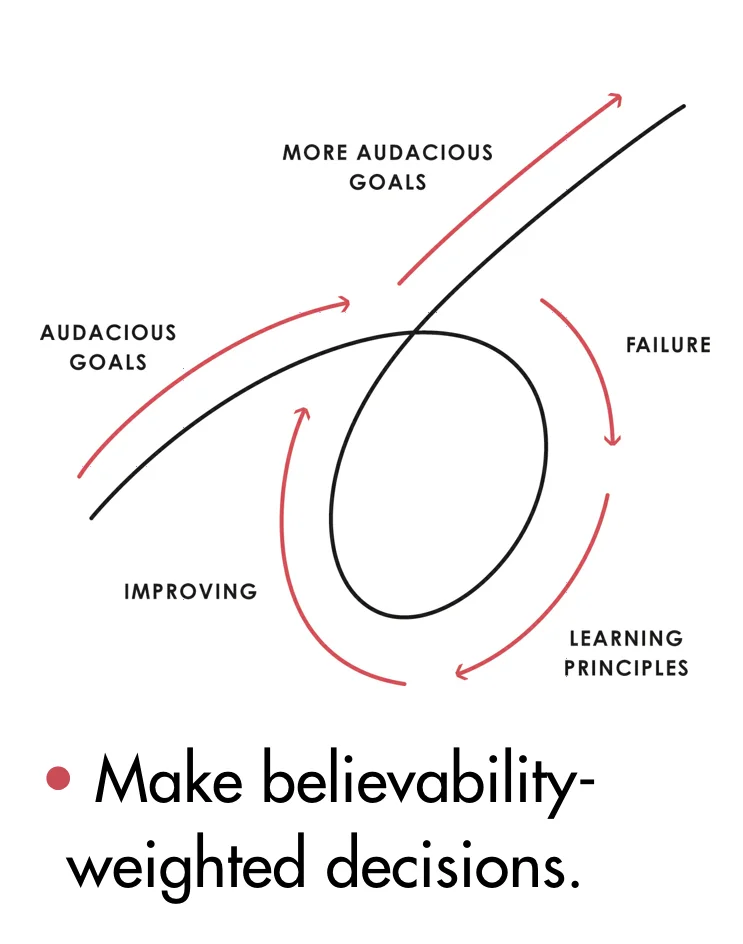
The text beneath the diagram names a separate decision-making principle: give more weight to views supported by relevant experience and sound reasoning.
Each cycle gives you information for the next. The point is not to avoid every setback, but to improve how you diagnose and respond. Keep diagnosis separate from designing a solution, so that action addresses the cause rather than only the symptom.
- Ray Dalio · Life Principles
- Ray Dalio · The 5-Step Process
- Ray Dalio · Radical Open-Mindedness
- Ray Dalio · Problems and the Looping Process
- Principles For Success · YouTube
A paraphrased introduction to the author’s life and work principles. The diagram illustrates a recurring learning process, not a guarantee of uninterrupted progress.